Table of Contents
Fall in Western New York is beautiful, but it is also the season when weak trees start to show their problems. Wet leaves, early frost, lake-effect wind, and the first heavy snow can turn a leaning or decaying tree into a serious hazard. If you have searched for a tree removal service near me because a tree on your property worries you, this guide explains how to prepare before the crew arrives and what to expect afterward.
Arbor Ridge Tree Service in Buffalo, NY, helps homeowners and property managers plan safe, tidy removals before winter sets in.
Why Fall Is a Smart Time to Plan Tree Removal in Buffalo
Many people wait until a storm forces their hand, but fall is one of the best windows to act. Here is why:
- Leaves begin to drop, so crews can see the branch structure and spot dead limbs more easily.
- Cooler temperatures are easier on crews and equipment during long jobs.
- Ground conditions are usually firmer than during the spring thaw, which helps protect your lawn from heavy machinery.
- Scheduling early avoids the winter rush, when storm damage calls flood every company in the region.
- Removing a hazardous tree before snow and ice arrive lowers the risk of damage to your roof, fence, garage, and power lines.
For homeowners comparing options for tree removal Buffalo NY, the fall season offers more flexibility and shorter waits than the emergency season that follows.
Signs a Tree Should Be Removed
Not every tree with a few dead branches needs to come down. Still, some warning signs are difficult to ignore. Call a professional if you notice any of the following:
- A visible lean that has gotten worse over time
- Large cracks or splits in the trunk
- Mushrooms or fungus growing at the base, which can point to internal rot
- Hollow areas or cavities in the trunk
- Large dead branches in the upper canopy
- Exposed or lifted roots after heavy rain
- Bark peeling away in large patches
- Damage from a previous storm or lightning strike
- Signs of pests such as emerald ash borer, which has affected many ash trees across Western New York
A certified arborist can inspect the tree and tell you whether pruning, cabling, or full removal is the right solution. If you are unsure, a professional tree removal service can give you an honest assessment before you commit to anything.
Your Fall Preparation Checklist
A little preparation makes the job faster, safer, and often less expensive. Before your scheduled appointment, work through this list.
Clear the Work Area
- Move cars out of the driveway and off the street near the tree.
- Take patio furniture, grills, planters, and decorations out of the drop zone.
- Put away children’s toys, bikes, and garden tools.
- Make sure the crew has a clear path from the street to the tree.
Protect Pets and Family
- Keep children and pets indoors during the removal.
- Let neighbors know when the work will happen, especially if branches overhang shared property lines.
Identify Hazards and Utilities
- Point out any underground sprinkler lines, invisible fences, or septic components.
- Let the crew know if power lines, cable lines, or service drops run near the tree.
- Never attempt to trim or remove a tree that touches a utility line. Contact your utility provider instead.
Take Photos and Check Insurance
- Photograph the tree and surrounding area before work begins.
- Review your homeowner’s insurance policy to see what it covers for storm-damaged or fallen trees.
- Ask your contractor to provide proof of liability insurance and workers’ compensation coverage.
Fall Tree Removal Timeline
Use the table below to plan your project from first call to final cleanup.
| Stage | What Happens | Homeowner Action |
|---|---|---|
| Initial contact | You call or submit an online request | Describe the tree, its location, and your concerns |
| On-site estimate | An arborist inspects the tree and property | Point out hazards, fences, and utilities |
| Written quote | The company provides scope, price, and schedule | Compare details and confirm insurance coverage |
| Permit check | Local rules are reviewed if required | Ask about requirements in your city or town |
| Removal day | The crew fells or dismantles the tree safely | Keep people, pets, and vehicles clear |
| Cleanup | Debris is hauled away and the site is raked | Walk the property with the crew leader |
| Follow-up | Stump grinding, mulch, or replanting is arranged | Decide on stump removal and a replacement tree |
What to Expect From a Professional Tree Removal Service
When you hire a qualified tree removal service, the process should feel organized and transparent from start to finish.
- Inspection and quote. The arborist walks the property, examines the tree, and explains the safest approach.
- Safety setup. Crews mark the work zone, check for hazards, and use proper protective gear.
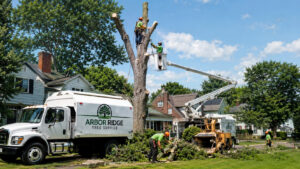
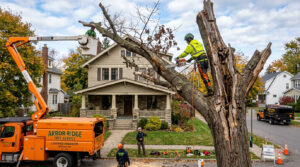
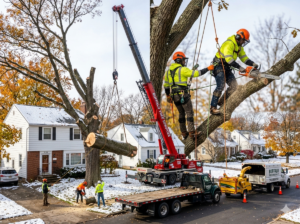
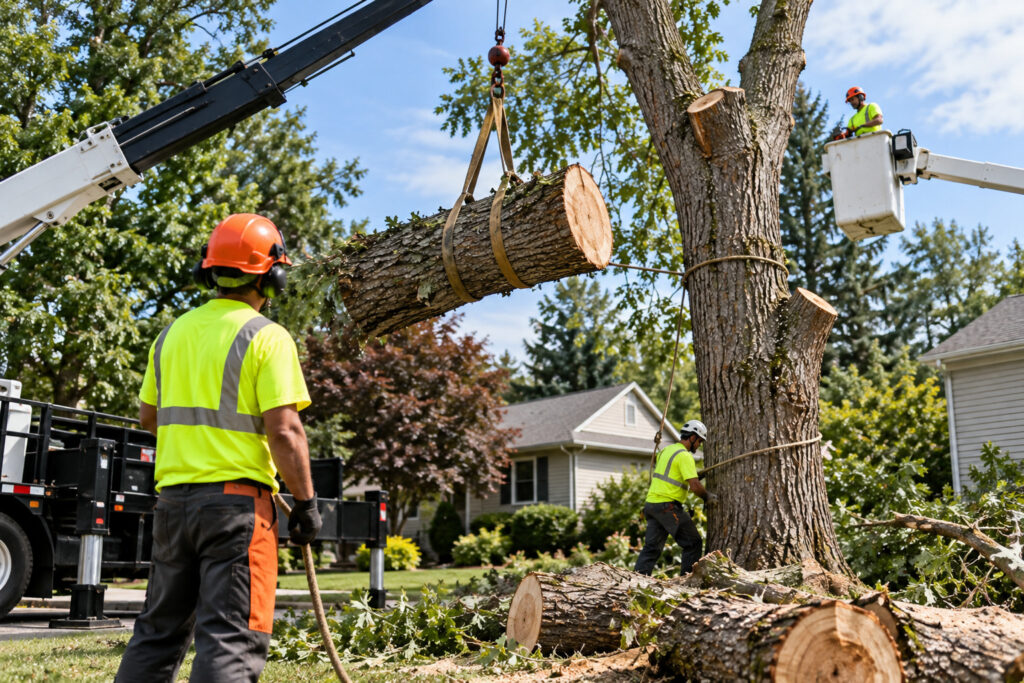
- Careful removal. Depending on space, the tree may be cut down in sections and lowered with ropes and rigging to protect your home and landscaping.
- Cleanup. Branches, logs, and sawdust are cleared so your yard is left in good condition.
- Optional extras. Many homeowners add stump grinding, firewood, or wood chips to the job.
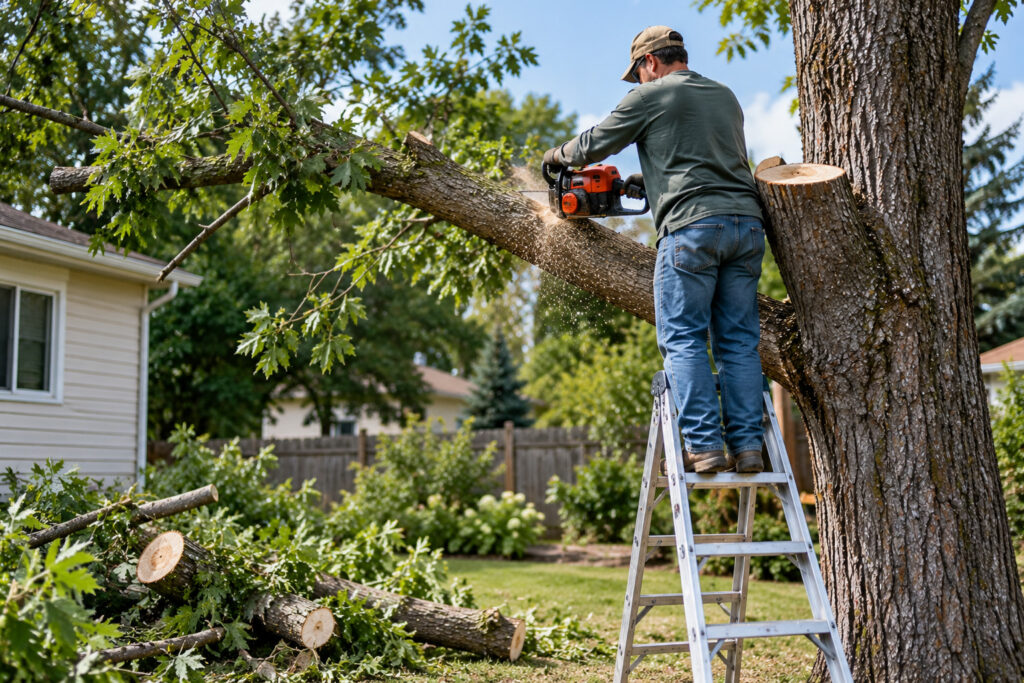
Removing a large tree is dangerous work. Attempting it yourself with a chainsaw and a ladder puts you, your family, and your property at risk. Trained crews carry the equipment and insurance to handle it properly.
Permits and Local Rules in Buffalo
Some municipalities in the Buffalo area regulate the removal of certain trees, particularly street trees or trees in protected areas. Before removal, check with the City of Buffalo or your local town office to find out whether a permit is needed. A reputable company can help you understand the process, but you should always confirm requirements with your local authority.
How to Choose the Right Company in Buffalo
Searching for tree removal service Buffalo will bring up plenty of results, so it helps to know what separates a dependable company from a risky one. Look for these qualities:
- Proof of liability insurance and workers’ compensation
- Trained, experienced arborists on staff
- Clear written estimates with no vague line items
- Positive local reviews and references
- Modern equipment and safe work practices
- Willingness to explain why removal is necessary, not just push for a sale
- Transparent cleanup and stump grinding options
Be cautious of anyone who knocks on your door after a storm asking for cash upfront, or who quotes a price without looking at the tree.
What Affects the Cost of Tree Removal
Every tree is different, so pricing varies. The main factors include:
- Tree height and trunk diameter
- Species and wood density
- Proximity to your house, fences, and power lines
- Access for trucks and equipment
- Tree health, since decayed trees can be more hazardous to remove
- Extra services such as stump grinding and hauling
- Whether the work is scheduled in advance or needed urgently
Getting a written estimate from a local tree service near me is the best way to see exactly what you will pay and what is included.
Why Homeowners Choose Arbor Ridge Tree Service
Arbor Ridge Tree Service serves Buffalo, NY, and the surrounding communities with a focus on safety, communication, and clean results. Whether you need a single hazardous tree taken down or several removed ahead of winter, our team works to protect your property and leave your yard tidy. If you are researching tree removal Buffalo NY for the first time, we are happy to walk you through the process and answer questions with no pressure.
After the Tree Comes Down
Once the work is done, consider a few smart follow-up steps:
- Grind the stump to prevent tripping hazards, pests, and regrowth.
- Reseed or sod the area before the ground freezes.
- Plant a replacement tree suited to Western New York’s climate, ideally in fall or spring.
- Use wood chips as mulch around garden beds and remaining trees.
- Schedule a health check for your other trees so future problems are caught early.
Frequently Asked Questions
How far in advance should I book tree removal in the fall?
Reserve your spot as early as you can. Fall is a popular time, and demand rises quickly once storms begin. Booking a few weeks ahead usually gives you the best choice of dates.
Is it safe to remove a tree in cold weather?
Yes. Professional crews work throughout the year. Frozen ground can even help protect your lawn from equipment. The main concerns are ice and high winds, and a responsible company will reschedule if conditions are unsafe.
How do I know if my tree is dead or just dormant?
Dormant trees drop leaves naturally in autumn but have flexible, living twigs. Dead trees often have brittle branches, peeling bark, and no buds. An arborist can confirm with a quick inspection.
Does homeowner’s insurance cover tree removal?
Coverage depends on your policy and the situation. Insurance often helps when a tree falls on a structure, but may not cover removal of a healthy tree. Contact your insurer to confirm.
What should I look for when searching for a tree service near me?
Focus on insurance, experience, written estimates, and local reviews. A trustworthy company will explain options clearly and never pressure you.
Do I need a permit for tree removal Buffalo residents request?
It depends on the tree’s location and type. Trees on public property or in protected areas may require approval. Check with your local municipality before scheduling.
What happens to the wood after removal?
You can keep it for firewood, have it chipped into mulch, or ask the crew to haul it away. Discuss your preference during the estimate.
Get Ready Before Winter Arrives
A little planning in the fall can save you from costly damage and stressful emergencies once winter storms arrive. Inspect your trees, clear the work area, gather questions for your contractor, and schedule early. If a tree on your property looks unsafe, do not wait for the first snowfall to find out how strong it really is.
Contact Arbor Ridge Tree Service today to schedule an inspection and get a clear, written estimate for safe tree removal in Buffalo, NY.